
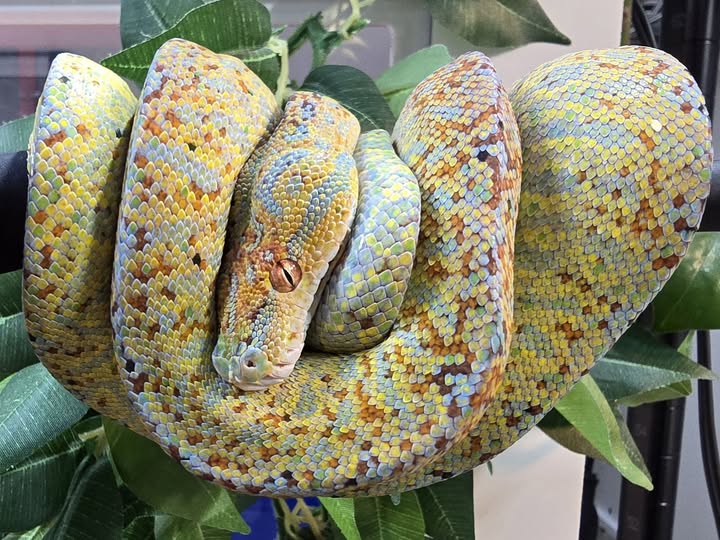
 THC 25-17 © Tetraham Chondros
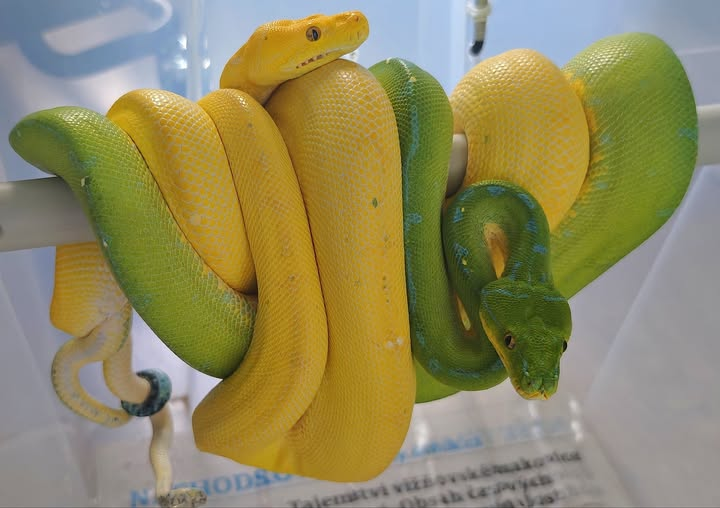 Kofiau © Oli Olivan
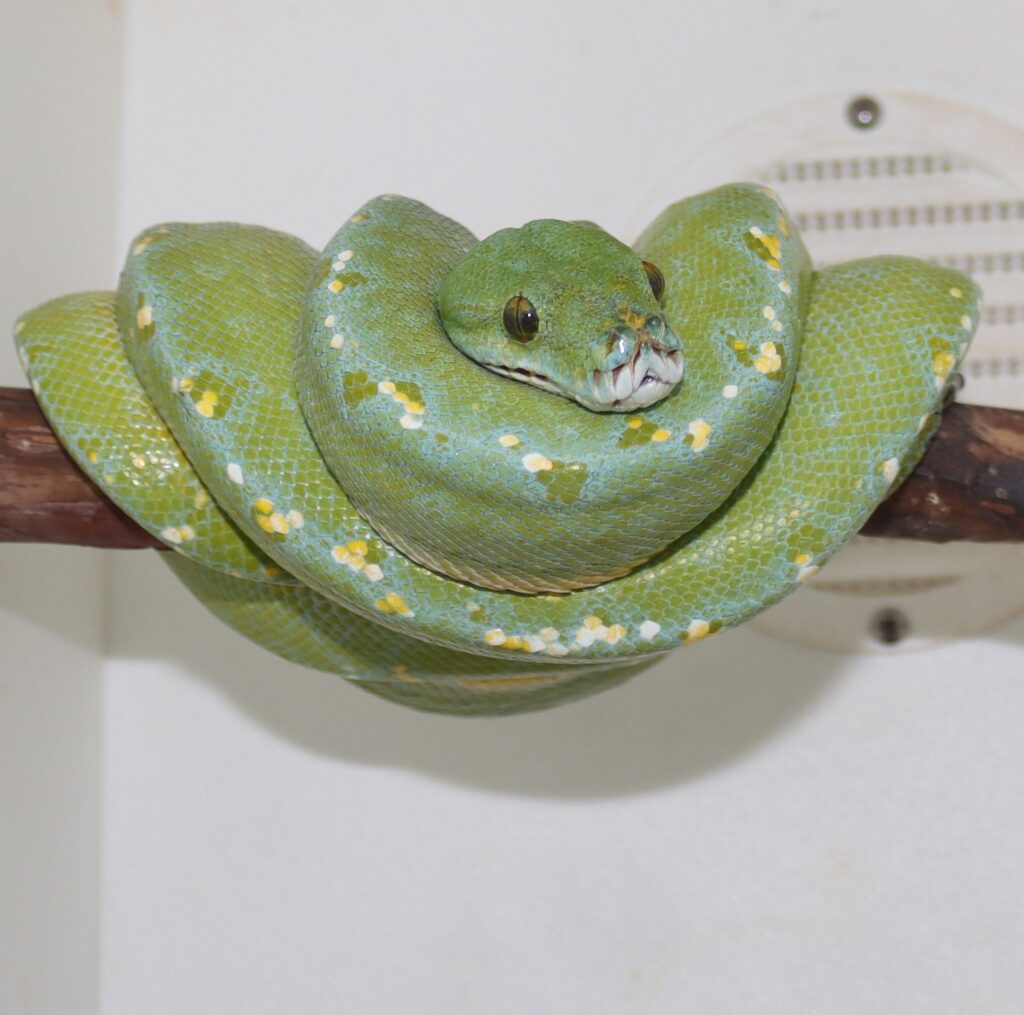 Manokwari (red neonate) © Molecular Reptile
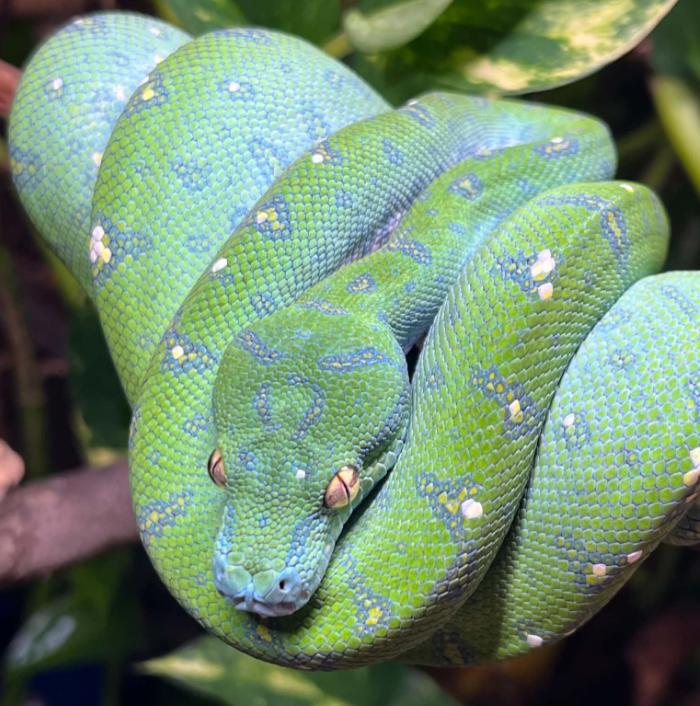 Aru © Lisa Farinha

Meet the Green Tree Pythons
Explore Morelia viridis and the three subspecies of Morelia azurea. Select a card to learn about their distribution, appearance, juvenile coloration, and identifying traits.
Open the full PDF ↗Loading page previews…
BIOSECURITY
Biosecurity is the practice of preventing infectious diseases from entering or spreading through an animal collection. For green tree python keepers, good biosecurity is especially important because a snake can appear healthy while still carrying an infectious organism. Once a disease enters a collection, it may spread between animals through direct contact, contaminated hands, equipment, enclosure surfaces, feeding tools, or other materials.
One important part of biosecurity is testing new green tree pythons for nidovirus. Reptile nidoviruses can cause serious respiratory disease and may spread between snakes. Testing helps identify infected animals before they are introduced to the rest of a collection. A new chondro should therefore be quarantined separately and tested before sharing space, tools, or equipment with established animals. Testing is not a replacement for quarantine, but it provides another important layer of protection.
Preventing cross-contamination is equally important. Hands should be cleaned between handling animals or working in different enclosures. Hand sanitizer can help reduce the transfer of microorganisms when used properly, although visibly dirty hands should be washed thoroughly with soap and water. Feeding tongs, water containers, cleaning supplies, and other equipment should also be kept separate whenever possible, especially for animals in quarantine.
Biosecurity may seem like extra work, but it protects the entire collection. Quarantine, nidovirus testing, clean hands, dedicated equipment, and careful handling practices greatly reduce the chance that one newly acquired animal will expose every other chondro in your care.
Enclosures
chondroHUB · Enclosure essentials
Three enclosure types. One shared goal.
Plastic tubs, PVC enclosures, and glass terrariums can all work. What matters is how well the setup meets your chondro’s needs.
Plastic tubs
Learn more about tubs
Tubs are commonly used for hatchlings, juveniles, and quarantine. Appropriately sized and equipped tubs may also house adults.
They can retain heat and humidity well, but ventilation openings and a secure lid are essential. Choose dimensions that allow suitable perches and room to move.
PVC enclosures
Learn more about PVC
PVC enclosures are a popular choice for adults. They are durable and can accommodate different perch, heating, and ventilation layouts.
Their ability to retain moisture is helpful, but poor ventilation can allow excess moisture and stale air to accumulate.
Glass terrariums
Learn more about glass
Glass allows you to observe your chondro without opening the enclosure and works well for naturalistic displays.
Room conditions, enclosure construction, and screen area affect heat and moisture loss. Monitor conditions and adjust the setup rather than assuming every glass enclosure behaves the same way.
Explore the essentials
What every enclosure needs
Choose a number or topic to see why it matters.
Secure perches
Provide firmly mounted perches suited to the snake’s size, with comfortable places to rest and opportunities to move.
Simplified illustration; not a scale drawing or equipment-placement guide.
Put it into practice
A quick check
Your enclosure holds humidity well, but airflow is poor. What should you address?
Perches
chondroHUB · Perch essentials
A comfortable place to perch.
Chondros spend much of their time resting on branches and horizontal supports. Choose perches that offer a comfortable grip, secure support, and room to move.
Natural branches
Learn more about branches
Natural branches offer a realistic appearance and a variety of shapes and gripping surfaces.
Use suitable, sturdy branches. Clean them thoroughly and inspect for sharp points, splinters, and deterioration before installation. Secure each branch so it cannot shift under the snake’s weight.
PVC pipe
Learn more about PVC
PVC pipe provides a consistent shape and can be installed in removable supports for enclosure cleaning.
Select a diameter suited to the animal. Ensure cut edges are smooth and the mounting arrangement prevents the pipe from rolling, sliding, or dropping out.
Removable plastic rods
Learn more about plastic rods
Smooth, sturdy plastic perches can be simple to sanitize and resistant to moisture.
Removable should still mean secure during use. Check that the rod cannot rotate, slip free, or flex excessively under the animal’s weight.
Three things to get right
Material is only the beginning.
Explore the fit, mounting, and placement of your perches.
Match the perch to the snake.
Choose a diameter the snake can comfortably wrap around. Smaller snakes generally need smaller perches, while larger snakes need more substantial support.
Offer more than one suitable diameter and observe how the animal uses them.
Illustrations are simplified. Perch sizes are not to scale. Measure temperatures at the actual resting locations.
The main takeaway
Useful perches. Room to move.
A few well-positioned, secure perches can provide comfortable resting and climbing opportunities. Avoid crowding the enclosure with branches that restrict movement.
Put it into practice
A quick check
Your chondro’s perch is the right diameter, but it rotates when the snake moves. What should you do first?
Temperature & Humidity
chondroHUB · Temperature & humidity
Give your chondro a choice.
Green tree pythons rely on their surroundings to regulate body temperature. Provide warmer and cooler resting areas, appropriate humidity, and fresh-air exchange.
Daytime warm area
84–86°F
Approximately 29–30°C
Learn more about warmth
This is a general starting range for the warm area, not a target for the entire enclosure or the heater’s surface.
Control heating equipment with a suitable thermostat and independently check the temperatures the animal experiences. The thermostat’s displayed setting may differ from the temperature at the perch.
Daytime cooler area
78–82°F
Approximately 26–28°C
Learn more about the gradient
Heating every part of the enclosure to the same temperature removes the animal’s ability to choose between warmer and cooler resting locations.
Check both sides of the enclosure. Nighttime conditions may be slightly cooler, but avoid large or uncontrolled drops.
General humidity range
50–70%
Relative humidity · Starting guidance
Learn more about humidity
Humidity can temporarily increase after misting. Allow the enclosure to partly dry between misting cycles instead of keeping all surfaces constantly wet.
Air humidity and surface wetness are different conditions. Check the hygrometer, substrate, perches, and ventilation. Keep fresh drinking water available.
These are general starting ranges from this guide, not universal targets for every animal or setup. Age, health, enclosure design, and individual needs can affect the appropriate conditions.
Explore the temperature gradient
Two areas. A choice of resting spots.
Select an area to move the illustrated chondro.
84–86°F Cooler area
78–82°F
A place to warm up.
A warmer resting area gives the snake access to warmth when needed. It should also be able to leave that area.
Concept illustration, not a heat-distribution model. Measure your actual enclosure; temperatures depend on the setup.
Understand the moisture cycle
Humidity without constant wetness.
Select a stage to explore what changes.
Humidity may rise temporarily.
Misting adds moisture and can temporarily increase relative humidity. A brief rise does not mean surfaces should stay wet continuously.
This sequence illustrates a principle, not a fixed misting schedule or a measured drying rate.
Control and verify
Check the conditions your snake experiences.
- Control heat: use a reliable thermostat suited to the heating equipment.
- Measure independently: check temperatures at warmer and cooler resting locations.
- Prevent burns: install heat sources so the animal cannot contact dangerously hot surfaces.
- Monitor moisture: use a hygrometer and inspect surfaces for persistent wetness.
- Maintain airflow: provide ventilation and keep fresh drinking water available.
A note on radiant heat panels
Radiant heat panels are one commonly used heating option. They still require appropriate installation, thermostat control, and temperature checks. Follow the manufacturer’s mounting, clearance, and probe-placement instructions.
Put it into practice
A quick check
Both ends of the enclosure measure 86°F at perch height. What is missing?
Lighting
Do chondros need lighting?
A predictable day-and-night cycle helps your chondro distinguish daytime from nighttime. Provide suitable illumination, access to shade, and a regular dark period.
1. Set a consistent cycle
Use a timer to create a reliable period of light followed by darkness each day.
What might a schedule look like?
A schedule of approximately 10–12 hours of light followed by 12–14 hours of darkness provides a straightforward starting point.
For example, lights on at 8 AM and off at 8 PM creates a 12-hour day and a 12-hour night.
2. Choose suitable lighting
Enclosure lighting should provide visibility without excessive brightness or unwanted heat.
Are lighting and heating the same?
Standard LED or fluorescent fixtures can illuminate an enclosure. Live plants may also influence your lighting choices.
Do not assume an illumination fixture will provide appropriate heating. Any fixture used for heat needs suitable temperature control and monitoring.
3. Include shaded areas
Arrange foliage and perches so your chondro can move away from direct illumination.
Why does shade matter?
Lighting should not force the snake to remain in the brightest part of the enclosure throughout the day.
Consider the light reaching the actual resting perches, not just how bright the enclosure looks from outside.
A clear day. A predictable night.
Select a phase to preview the example routine.
Light with somewhere to retreat
The timer turns the lights on at 8 AM. Suitable illumination establishes daytime while foliage provides shaded resting areas.
This illustrates one example schedule. The nighttime scene remains visible so you can see the enclosure; it does not represent a night-light recommendation.
What about UVB?
Some keepers provide low-level UVB as part of their setup. Its use requires thoughtful fixture selection and positioning, along with access to shade.
What should I consider before adding it?
- The fixture: choose equipment appropriate for the animal and enclosure.
- The distance: consider the distance from the lamp to the snake’s accessible perches.
- The retreat: provide areas where the snake can move out of direct exposure.
Follow guidance specific to the UVB fixture and your setup. Avoid placing a strong source close to a resting perch.
Substrate
chondroHUB · Substrate essentials
Choose a floor you can keep clean.
Naturalistic and simple setups can both work. A suitable substrate supports your enclosure’s humidity needs and is easy for you to maintain consistently.
Coco bark / husk chips
Learn more about coco
Chunky coconut substrate can hold moisture while allowing the surface to dry between misting cycles.
Remove soiled areas promptly. Check below the surface, too: the top can look dry while wetter material remains underneath.
Product names vary. Chunky coconut chips and fine coconut fiber have different textures, so check what you are buying.
Paper towel
Learn more about paper towel
Paper towel is useful for hatchlings, quarantine, and animals that need close observation.
Its light, simple surface makes droppings and other visible abnormalities easier to notice. It is inexpensive and easy to remove during cleaning.
Replace contaminated or excessively wet sheets rather than covering them with a fresh layer.
Other suitable options
Learn more about alternatives
These options can work when the material is appropriate for reptiles and suited to the enclosure.
A bioactive setup is a planned system, not simply a bag of soil. It still requires inspection and maintenance.
Check product ingredients and avoid dusty, scented, chemically treated, or irritating materials.
A simple care routine
Inspect. Clean. Recheck.
Select a step to see what to look for.
Humidity does not mean a soaked floor.
Inspect the substrate for saturation, spilled water, and areas that stay wet. Moisture-retaining material should not be constantly waterlogged.
Check the substrate itself as well as your humidity reading.
Illustrations are simplified; they do not represent a recommended substrate depth or an exact moisture level.
Before you buy
Check the material, not just the appearance.
Avoid substrates with these characteristics:
- Excessive dust or particles likely to cause irritation.
- Added fragrances or heavy scents.
- Chemical treatments unsuitable for reptile use.
- Cedar and similar aromatic woods.
Put it into practice
A quick check
The humidity reading looks appropriate, but part of the substrate stays soaked. What should you do?
The main takeaway
Cleanliness matters more than appearance.
Choose a suitable substrate that you can inspect, clean, and replace consistently. The best-looking setup still needs good moisture control and routine care.
Hydration
How can I keep my chondro properly hydrated?
Start with fresh drinking water, balanced moisture, and good airflow. A humid habitat doesn’t need to stay constantly wet.
1. Keep water available
Provide a stable, accessible bowl of clean drinking water at all times.
Build a simple bowl routine
Check the bowl daily. Replace the water and clean the bowl regularly, and immediately if waste, substrate, or debris contaminates it.
Position it where your chondro can reach it comfortably and where it is unlikely to tip.
2. Mist thoughtfully
Light misting can provide drinking droplets and temporarily raise humidity.
Understand what misting does
Some chondros drink droplets from enclosure surfaces. Others readily drink from a bowl.
Droplets offer another drinking opportunity. Keep the water bowl available even when you see your snake drinking after misting.
3. Balance moisture & air
Maintain suitable humidity while allowing ventilation and some drying between mistings.
Look beyond the humidity reading
Humidity naturally rises after misting and falls as the enclosure dries. Check the surfaces and substrate too.
Persistently saturated conditions call for a review of misting, ventilation, and the overall enclosure setup.
Three checks for your daily routine
Select a step to see what to look for.
Is clean drinking water within reach?
Make sure the bowl is accessible, stable, and clean. Refresh the water and remove any contamination promptly.
Your chondro drinks droplets after misting. Can you remove its water bowl?
Keep drinking water available, mist with a purpose, and allow airflow and partial drying. Humidity alone doesn’t tell you whether your chondro is well hydrated.
Feeding
What should I be feeding my chondros?
Appropriately sized rodents, a thoughtful feeding routine, and attention to body condition help support healthy growth.
1. Choose suitable prey
Most captive chondros eat mice or rats. Select prey according to your snake’s size and condition.
How should I think about size?
Use the width of the snake’s body as a general reference when choosing proportionate prey. Avoid oversized meals.
Small hatchlings need smaller prey. Increase prey size gradually as the animal grows, rather than automatically choosing a larger meal at every feeding.
2. Adjust with maturity
Young, growing chondros generally eat more frequently than healthy adults.
Why not use one fixed schedule?
Feeding needs change with growth, meal size, and body condition. A routine that suits a hatchling may provide too much food for an adult.
Review the animal’s condition over time instead of treating every date on the calendar as a requirement to feed.
3. Track condition & meals
Keep simple records of meals, feeding responses, sheds, and weight to spot changes over time.
What should I record?
- Date and prey size.
- Whether the meal was accepted or refused.
- Weight when measured.
- Sheds and other relevant observations.
Look for trends across multiple entries. A single feeding response gives less context than a consistent record.
As your chondro grows, its routine changes
Select a life stage to explore the main feeding priorities.
Start small and keep clear records
Offer appropriately sized small prey and pay close attention to feeding responses. Establishing a reliable feeding pattern is more useful than rushing to larger meals.
These are general priorities, not a prescribed feeding schedule. Meal size and the individual animal’s condition matter too.
Prepare frozen-thawed prey properly
Frozen-thawed rodents avoid the bite injuries that live prey can cause.
-
Thaw completely
Make sure the prey is fully thawed before offering it.
-
Warm appropriately
Prepare the thawed prey for feeding without overheating it.
-
Use feeding tongs
Offer the prepared prey with suitable feeding tongs.
Respiratory Infections
Health & wellness
Recognizing respiratory problems
Respiratory disease is an important concern in green tree pythons. Changes in breathing deserve attention, and any obvious difficulty breathing should be taken seriously.
Possible warning signs
- Wheezing, clicking, or popping sounds while breathing.
- Excessive saliva, mucus, or nasal discharge.
- Frequent yawning or holding the head unusually high.
- Breathing with the mouth open.
More than one cause
Respiratory symptoms can occur with bacterial infections, viral disease, environmental problems, or other underlying conditions.
A veterinarian may need to examine the snake and recommend diagnostic testing. Treatment depends on the underlying cause.
Check the environment
Review enclosure temperatures, moisture levels, and airflow whenever respiratory symptoms occur.
Consistently cool temperatures, excessively damp conditions, and poor ventilation may contribute to illness.
Mites
Health & wellness
Spotting and managing mites
Snake mites are external parasites that can affect green tree pythons and other reptiles. Managing an infestation involves both the animal and its environment.
What you may notice
Very small dark or black specks may move on the snake, around the eyes, beneath scales, near the vent, or inside the enclosure. Small dots may also appear in the water bowl.
Affected snakes may become restless, rub against objects, spend more time around water, or show skin irritation. Some show few obvious behavioral changes.
Prevent spread
Mites can spread between enclosures through direct contact, contaminated equipment, furnishings, hands, and other materials.
Separate an animal suspected of having mites from unaffected reptiles and take care to prevent cross-contamination.
Use an appropriate plan
A veterinarian can confirm whether mites are present and recommend suitable treatment and environmental control.
Cleaning the enclosure and preventing cross-contamination are usually just as important as treating the snake.
Stomatitis
Health & wellness
Recognizing oral health concerns
Stomatitis, commonly called “mouth rot,” refers to inflammation or infection involving tissues inside or around the mouth.
Possible warning signs
- Redness or swelling of the gums.
- Unusual mucus, discharge, or crusted material.
- Unpleasant odor.
- Difficulty closing the mouth.
- Reduced interest in food.
- Visible abnormalities along the lips or gumline.
Look for the cause
Stomatitis may occur alongside trauma, other health problems, weakened immune function, or inappropriate husbandry.
Veterinary examination is recommended because treatment depends on both the severity and the underlying cause.
Protect delicate tissues
Do not aggressively scrape, cut, squeeze, or attempt to remove material from inside the mouth. Improper manipulation can cause injury.
Advanced infections may require professional cleaning, medication, supportive care, or additional diagnostics.
Stuck Shed
Health & wellness
Understanding retained shed
Retained shed occurs when portions of old skin remain attached after shedding. Small areas may occasionally occur without indicating a serious medical problem, but repeated incomplete sheds warrant a closer look.
Check sensitive areas
Pay particular attention to retained skin around the eyes and at the end of the tail.
Repeated incomplete sheds can suggest that hydration, humidity, overall health, or enclosure conditions need to be reevaluated.
Support normal shedding
Maintain access to drinking water, appropriate humidity, and suitable surfaces that the snake can use during shedding.
Review the overall enclosure and hydration routine when shedding problems recur.
Know when to seek help
Persistent retained shed, suspected retained eye caps, skin damage, swelling, or repeated shedding problems should be evaluated by a veterinarian.
A veterinarian can also determine whether an apparent patch of retained shed is actually another skin condition.
Rectal or Cloacal Prolapse
Health & wellness
Recognizing a prolapse
A rectal or cloacal prolapse occurs when tissue protrudes through the snake’s vent. It may appear as pink, red, or swollen tissue extending outside the body.
An urgent concern
A prolapse should be considered an urgent veterinary issue. Exposed internal tissue can quickly become dry, contaminated, swollen, or damaged.
Get professional guidance
While arranging veterinary care, the priority is to prevent exposed tissue from drying out or becoming further injured.
A reptile veterinarian should provide specific guidance for the individual situation.
Identify the cause
Possible causes include excessive straining, digestive problems, parasites, reproductive problems, trauma, or other medical conditions.
Identifying the underlying cause matters even after the tissue is returned to its normal position, because prolapse can recur.
Monitoring Overall Wellness
Health & wellness
Know what is normal for your chondro
Preventative care begins with understanding your individual animal. Consistent observation and simple records can make subtle changes easier to recognize over time.
Watch the whole animal
- Breathing and posture.
- Body condition and activity level.
- Appetite and feeding responses.
- Shedding and waste.
- Skin, mouth, and overall appearance.
Track changes over time
Keep simple records of feeding, shedding, weight, and unusual observations.
Compare changes with your snake’s usual patterns. Good husbandry and biosecurity reduce risks, but cannot eliminate illness entirely.
Establish veterinary care
Build a relationship with a reptile-experienced veterinarian before an emergency occurs.
Know where you would take your animal, how far away the clinic is, and whether it provides emergency reptile services.
Green Tree Python Buyer’s Guide Written by John Irby of Mid-Atlantic Arboreals
Explore the guide one page at a time. Select a card to start reading.
Open the full PDF ↗Loading page previews…